Case study · Self-initiated tool, 2026
skixO · Music Video Visualiser
A browser-based studio that turns a skixO track and a set of mascot frames into an audio-reactive music video, plus every promo asset around it.
- Role
- Concept, art direction, design and build
- Platform
- Web (desktop, Chrome or Edge for rendering)
- Status
- In use for skixO releases (private tool)
The brief
Every skixO release needs a video, a vertical cut, a Spotify Canvas and a handful of stills, and each of those used to mean starting from scratch.
I wanted the opposite: a visual identity strong enough to repeat, and a tool that could apply it to any new track in minutes. The visualiser listens to the track, works out its structure, and animates a calm, closed-eyed mascot against shifting backgrounds, in the spirit of a classic static-artwork visualiser rather than a full music video.
01Reading the track
The audio is analysed in the browser: low and high bands for kicks and hats, a smoothed energy curve for structure, and a tempo and downbeat estimate from the kicks. From that, every track splits into quiet, lifted and peak sections, and the two biggest moments get the peak treatment. Because the scale is relative to each track, a gentle song and a loud one both get the full range of looks.
02A character that stays in character
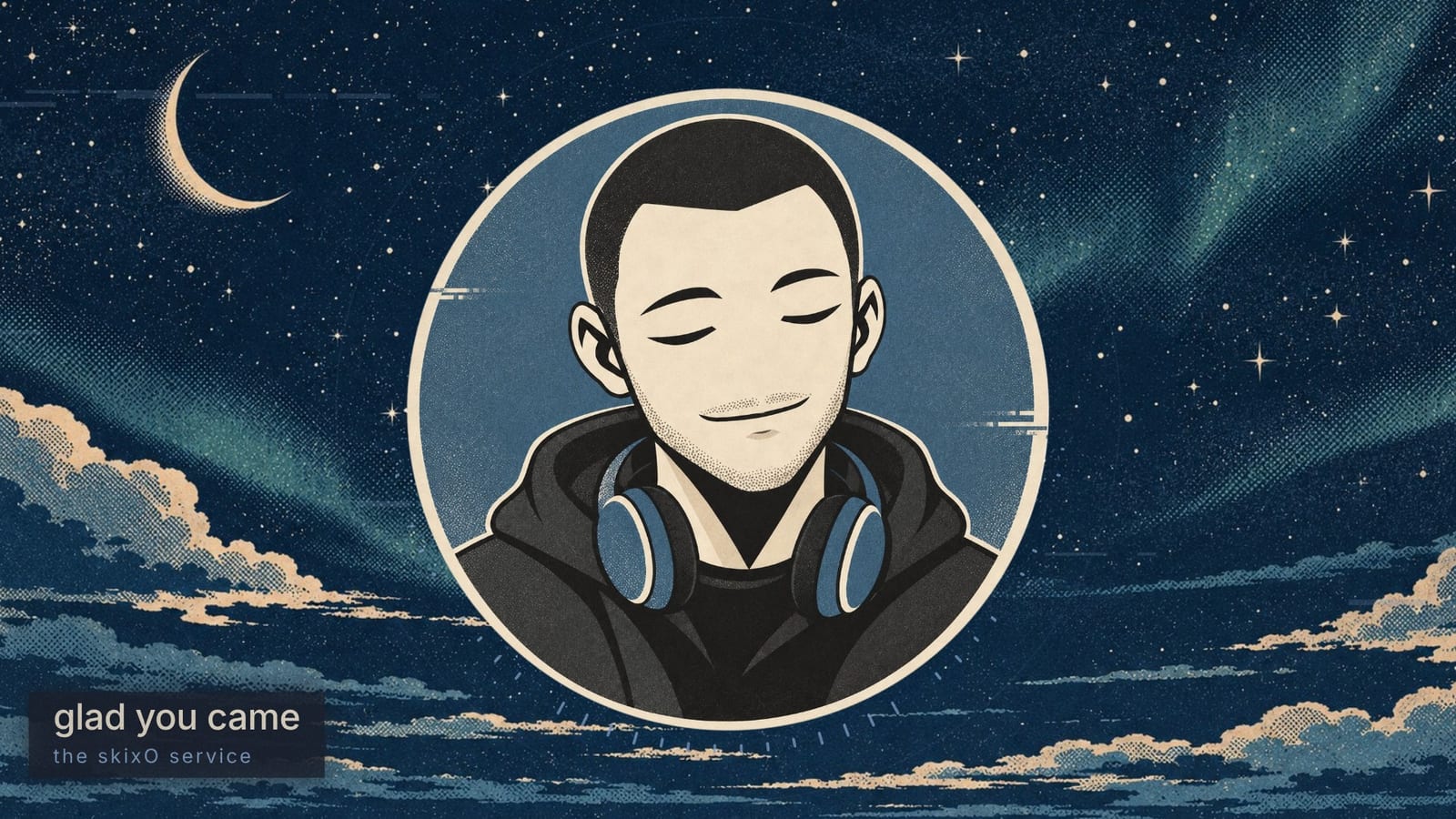
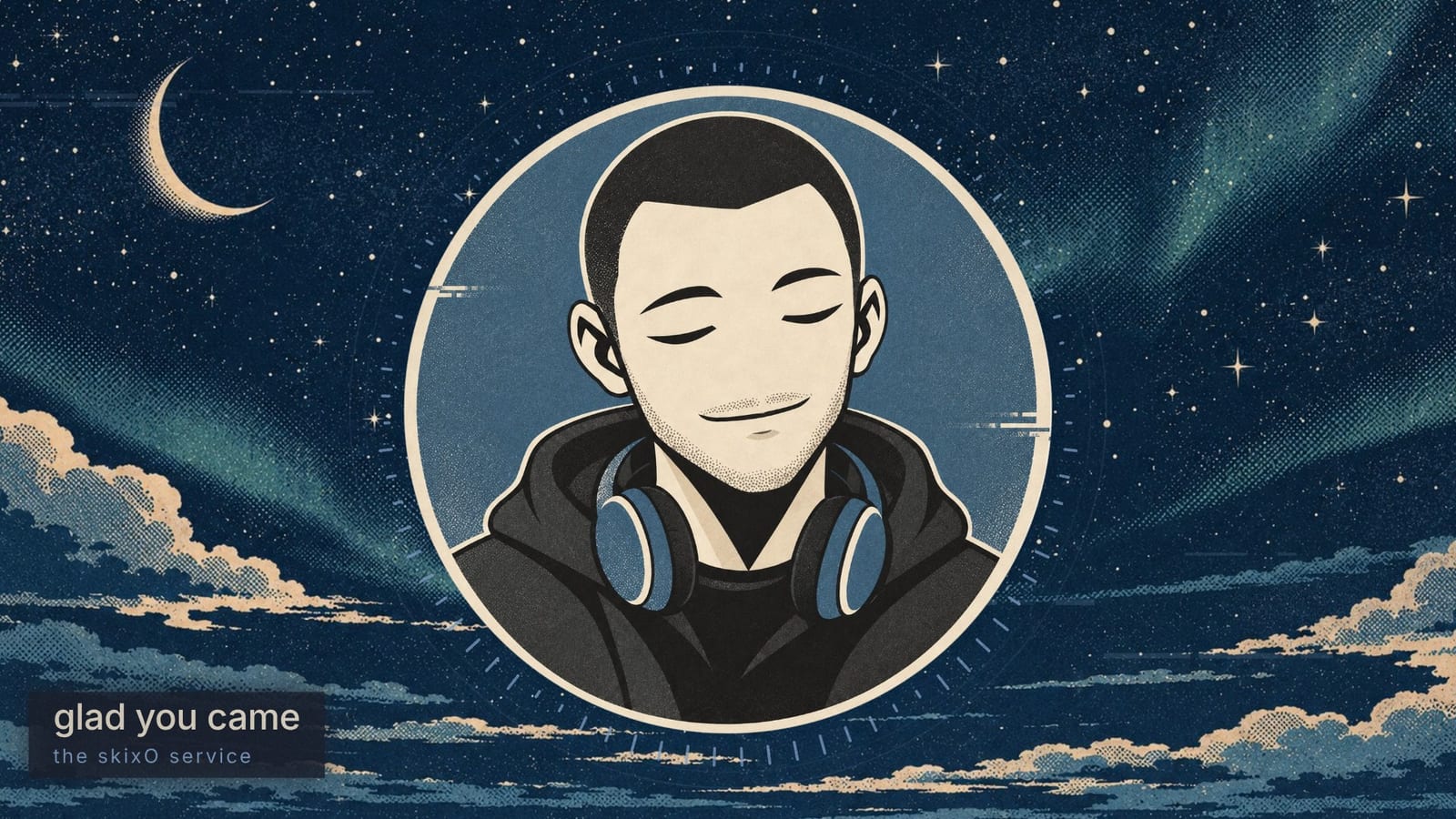
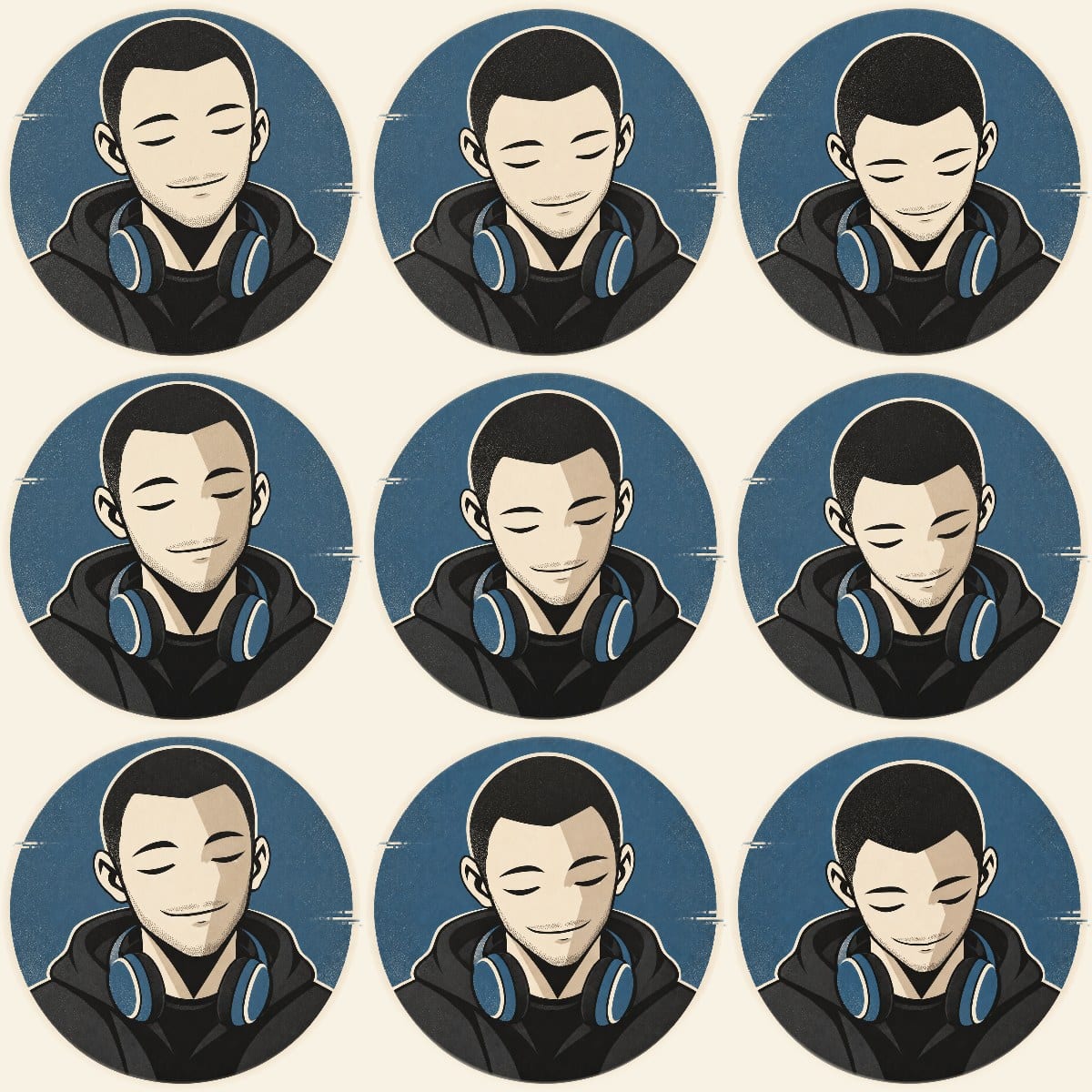
The mascot's identity is a closed-eye smile, so the animation is restrained: light shifts from flat to side light as the track lifts, the smile widens slightly at the peaks, and the head nods on the beat. Eye-open frames were tried and dropped because they broke the character.
The frames were produced with image generation under tight consistency rules (same canvas, same body, only the head changes), then aligned automatically so the body never jitters. Changes are clean cuts timed to a kick, like drawn animation, rather than crossfades that would ghost two drawings together.
03Backgrounds that carry the story
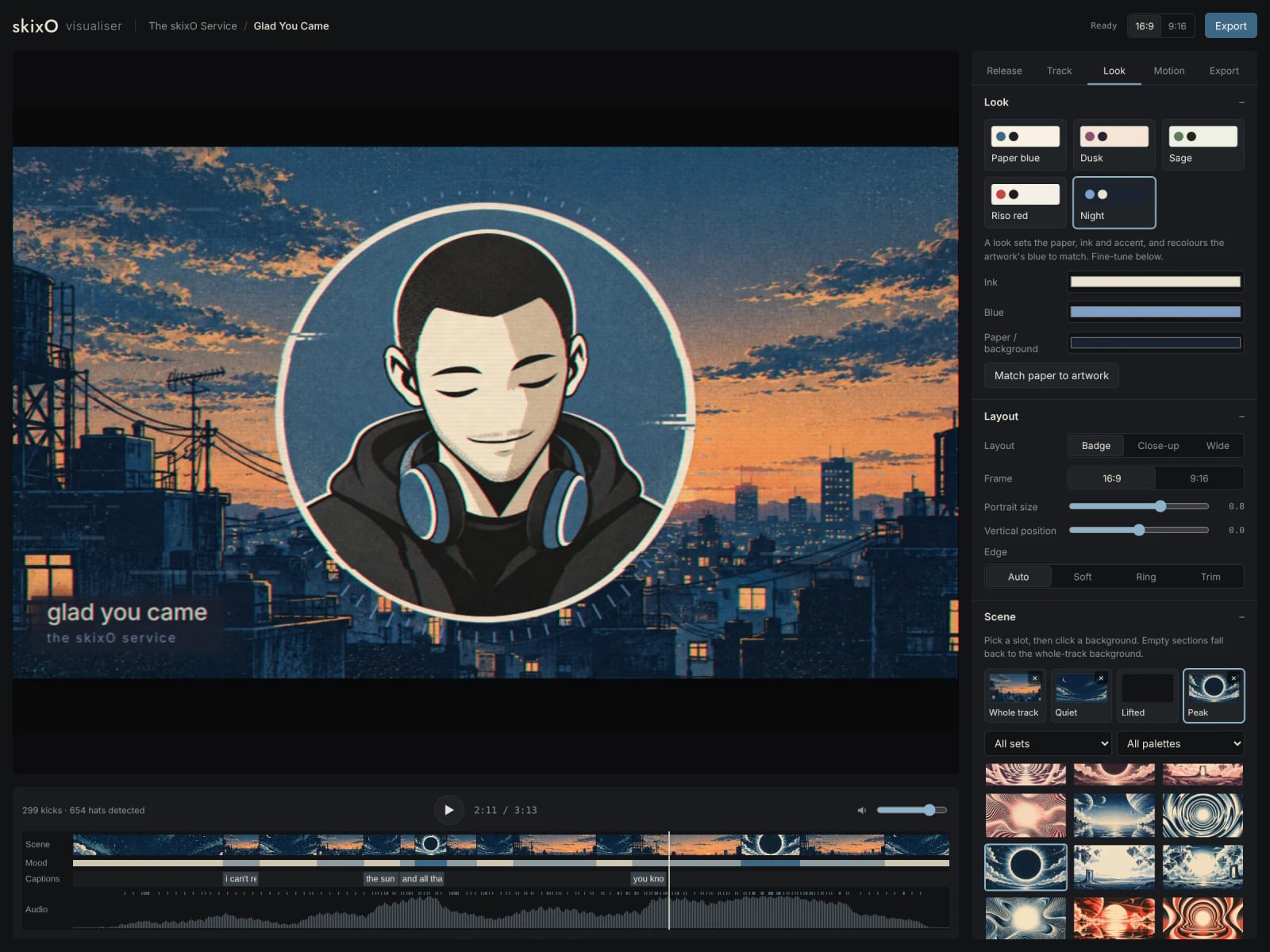
The mascot stays calm while the world behind it changes. Each section can have its own scene, with its own opacity, blur and drift, and scene changes follow the same timing as the mascot.
A library of 67 backgrounds in three sets (wistful, surreal, glitch) and four palettes sits behind a picker, and a "match look" step samples a background to recolour the badge so it always belongs to the scene.
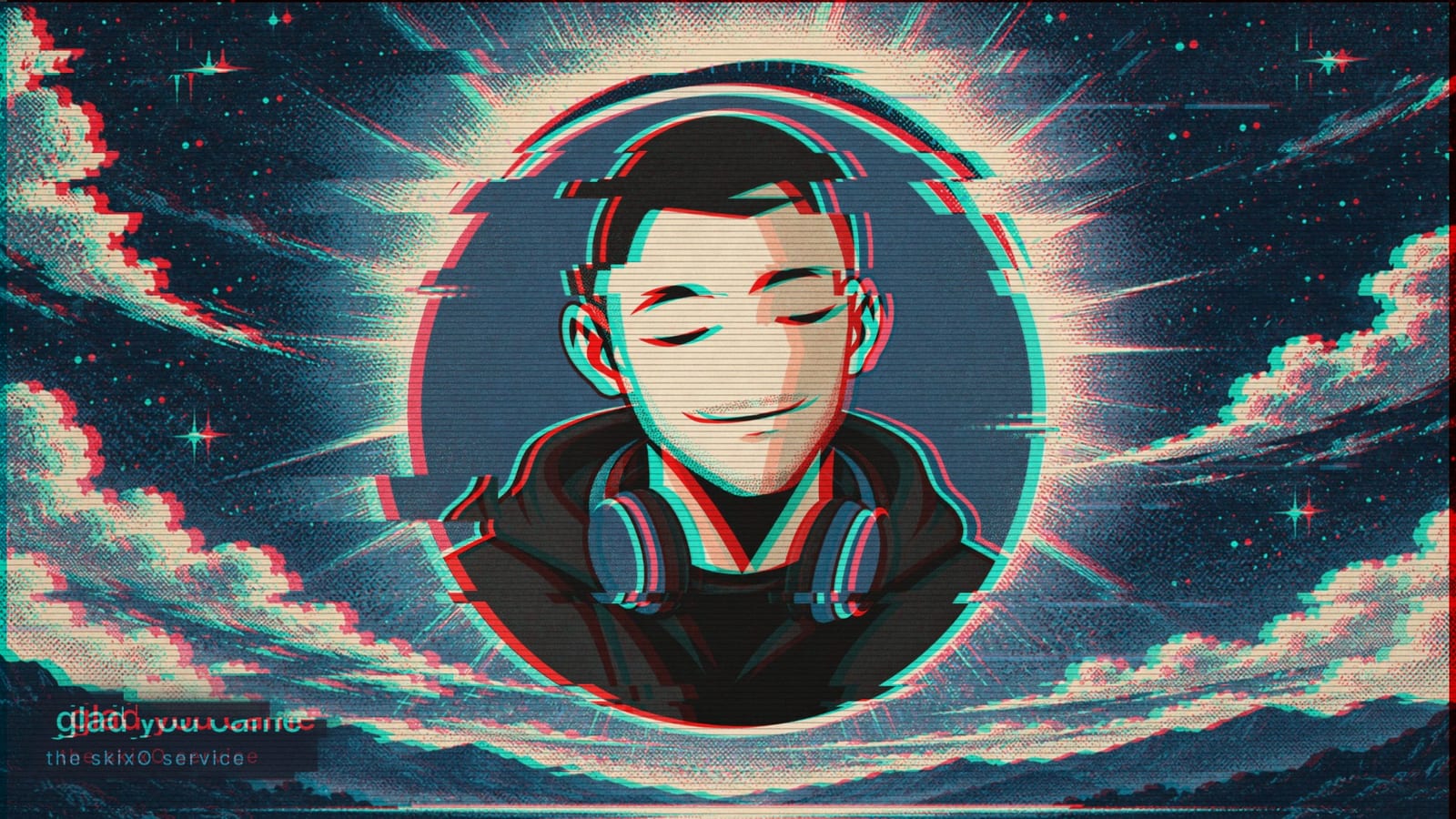
04Consistency across a body of work
Looks bundle paper, ink and accent colours and recolour the artwork to match. Release groups (an album, a series, a playlist) share a look and motion, while each release keeps its own track, titles, sections and captions. Groups export to a file for backup.
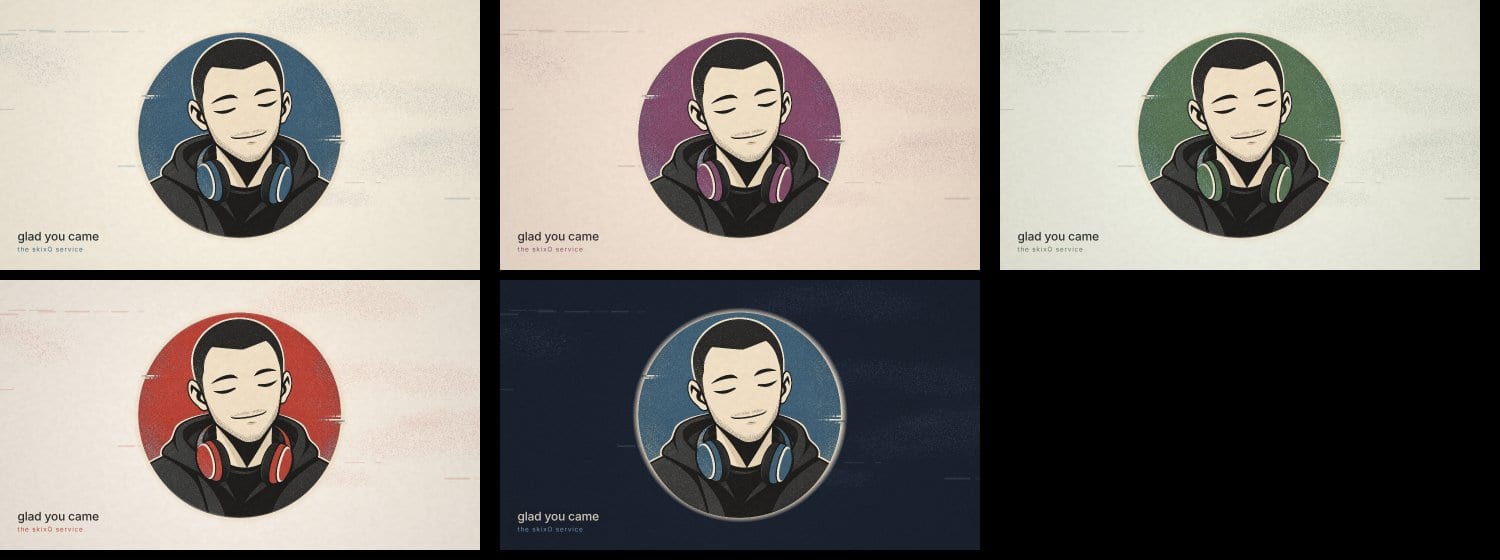
05One render, a full set of assets
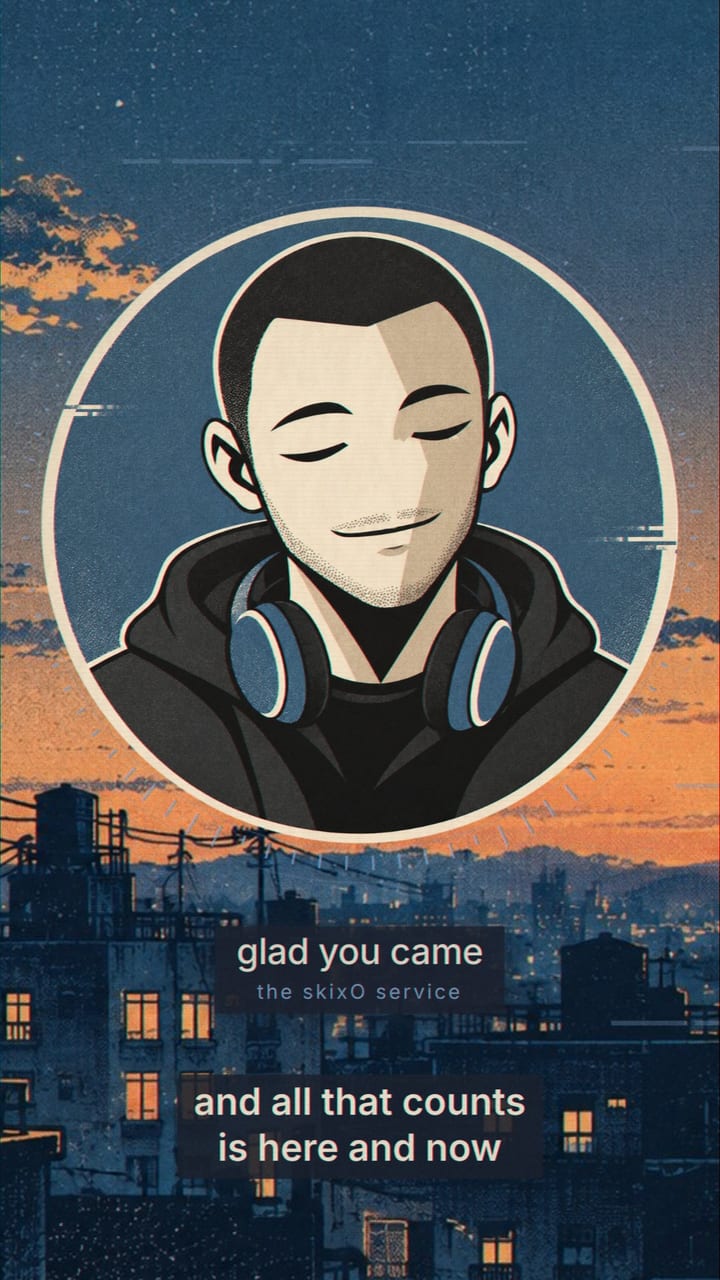
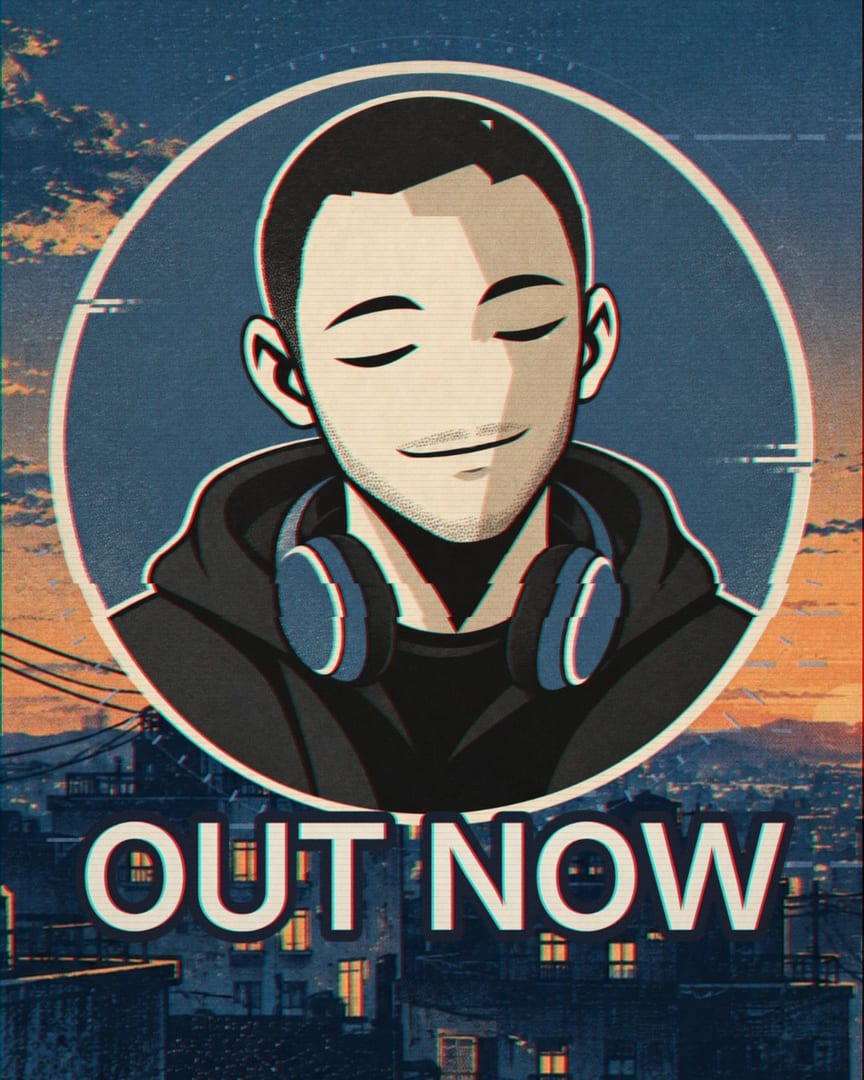
Rendering is frame-accurate and runs entirely in the browser: 16:9 and 9:16 in one pass, an 8-second seamless Spotify Canvas loop, and still presets for YouTube thumbnails, Instagram posts and Story covers with a headline type style. Lyrics are timed by tapping along as the track plays, then styled with entrances, finishes and fade timings.
06Designing the tool itself
The interface went through a research-led pass against established video editors. That brought a top bar with the essentials, a full-width timeline with Scene, Mood, Captions and Audio lanes (click a block to edit it), and a panel reorganised around the order you actually work through a release: release details, audio and sections, look, motion, export.
Highlights
- Audio analysis, sectioning, tempo detection and rendering all run in the browser; nothing is uploaded
- Stateless rendering: every frame is a pure function of time, so preview and export always match
- Section-aware scenes, motion and glitch, blended with the same timing as the character
- Release groups and looks for visual consistency across releases
- 16:9, 9:16, Spotify Canvas and still exports from one setup